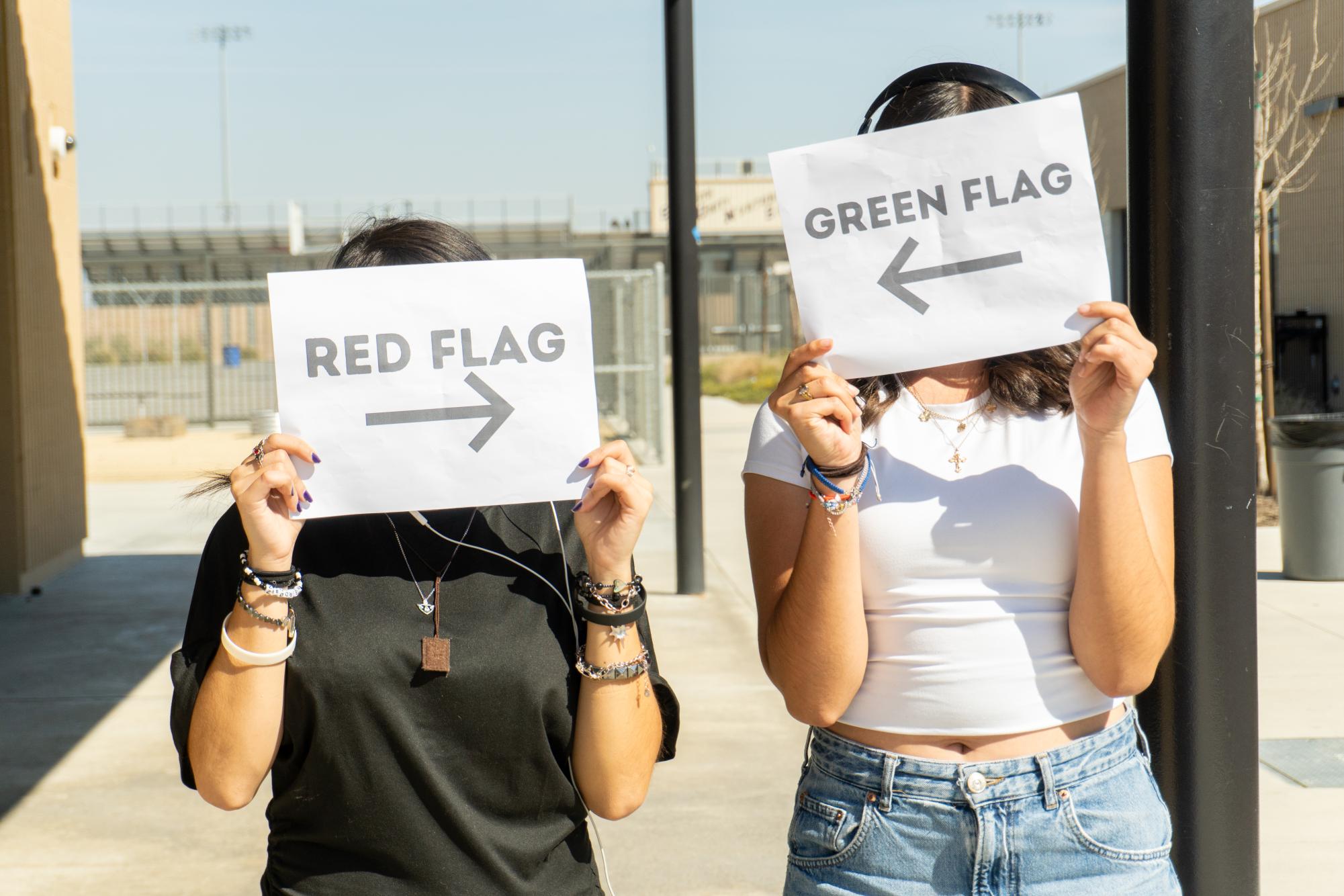
Relationships in high school are sometimes confusing, like when the lines of being caring and controlling are blurred. Or when you’re trying to figure out the difference between a red flag and a green flag.
It isn’t always as obvious as it sounds.
What exactly are red flags? Red flags are like warning signs in a relationship, it’s one’s behavior or a pattern that might signal something unhealthy or toxic to said relationship. Green flags are, on the other hand, a positive sign of something that shows trust and respect and good signs of knowing how to work a healthy relationship.
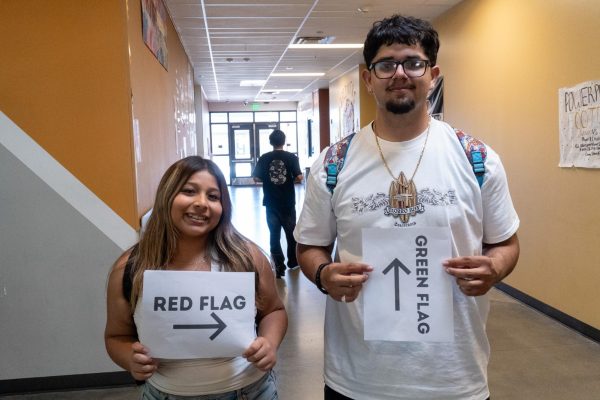
Sometimes red flags are hard to notice; they aren’t always flashing warnings. Sometimes they are small things we brush off because we care deeply about the person behind those signs or because we just don’t want to see those signs.
We asked students to share their thoughts.
”Stop expecting so much from a teenager,” Xaiver Uribe said.
Many relationship problems start when people expect a lot from their partner, whether it be physically or emotionally, and these expectations can potentially harm a relationship by putting your partner in chronic stress to perform rather than be themselves.
Juniors Makaiyla Jones and Valentina Perez pointed out that one of the most overlooked red flags is ”a partner being disrespectful towards others.”
Although it seems like something obvious, many seem to be oblivious when their partner treats strangers and even friends with disrespect when they’re being nice to you. Varsity baseball player Fernando Lopez said one red flag he notices is “lying and justifying their behavior instead of acknowledging and apologizing.”
It’s a red flag his teammate, Leo Hurtado, also notices.
Unlike Red flags, Green flags don’t have to be complicated since small things go a long way.
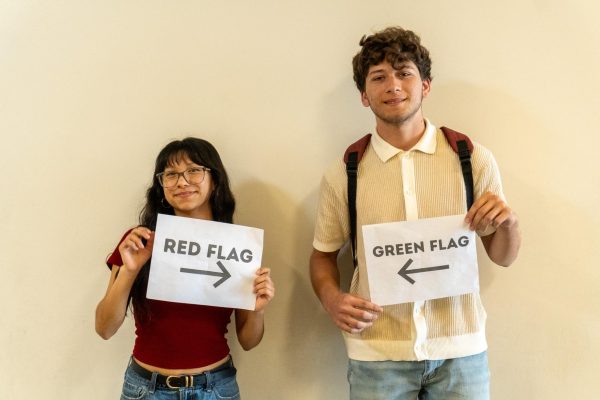
When asked about what green flags students like to see in others, many replied that simply caring is enough – not flowers or grand gestures, just someone who genuinely gives you the time of day.
Perez and junior Aaron Castro said they value emotional intelligence, which is the ability to properly understand emotions to positively build stronger relationships. When asked what more can people do, Jones said, “communicate with each other.”
It’s a sentiment shared by Uribe and Perez.
Castro offered a different response.
“You don’t have to talk 24/7 in order to have a good relationship,” he said.
Although some people agree that communication is key in a relationship, it can also be said that frequency doesn’t equate to effective communication.
Each student interviewed agreed that social media affects how people see relationships. Lopez specifically stated that people compare their own relationships to those online, setting their expectations too high or even too low. These unfair comparisons can lead a healthy relationship to feeling like it is inadequate.
So where does this come from? Students pointed to media and films for our ideas of what love looks like. Others pointed to their parents and grandparents.Lopez pointed to personal experiences and past mistakes.
The reality is there is no perfect relationship; no one is the perfect partner. But a relationship isn’t just about finding perfection, It’s also about finding someone willing to grow with you.